

























Recent research has shown that 68% of high-revenue growth companies have embraced a hybrid model worldwide. With businesses enjoying remote or hybrid working, benefits including reduced maintenance costs, improved flexibility and extended talent pool, cyber security awareness has become more critical than ever.
With this in mind, Indusface is intrigued to find out the most secure countries for businesses to allow their employees to work from, by creating an index score based on cybersecurity data including DDOS attacks, phishing sites, Malware hosting sites and compromised computers. Venky Sundar, Founder and President of Indusface also provided six tips for small businesses on ensuring cyber security.
We kindly ask that if you use this data you include a link to https://www.indusface.com/, as a linked credit allows us to keep supplying you with data you might find useful. A linked credit allows us to keep supplying you with future content that you may find useful.
Key Findings
- Finland and Belgium are named the most cyber secure European countries for business to allow their employees to work from, with the cyber security index score of 82.45 out of 100.
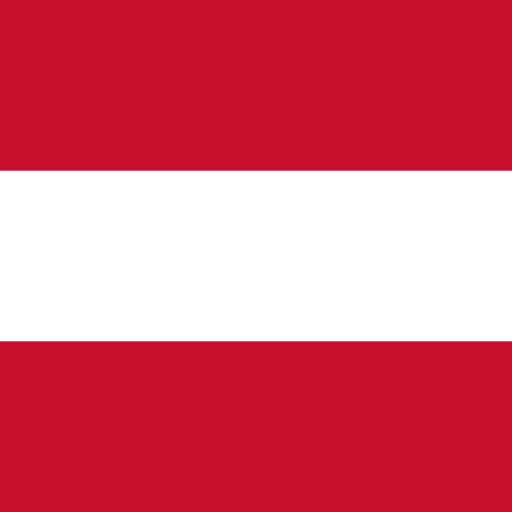
- Austria ranks third with an index score of 80.59 and the lowest number of both malware hosting sites and phishing sites in the top 10 European countries.
- The least cyber secure country is Bulgaria with an index score of 51.92/100.
- Venky Sundar, Founder and President of Indusface provides 6 top tips for cyber security when working remotely.
Top 10 most cyber secure European countries to work from
| Rank | Country | DDOS attacks per 100,000 Internet Users |
Phishing sites per 100,000 urls |
Malware hosting sites per 100,000 urls |
Compromised computers per 100,000 internet users |
Cyber security index score (/100) |
|---|---|---|---|---|---|---|
| = 1 | Finland | 79 | 320 | 430 | 47 | 82.45 |
| = 1 | Belgium | 314 | 280 | 390 | 11 | 82.45 |
| 3 | Austria | 175 | 260 | 340 | 137 | 80.59 |
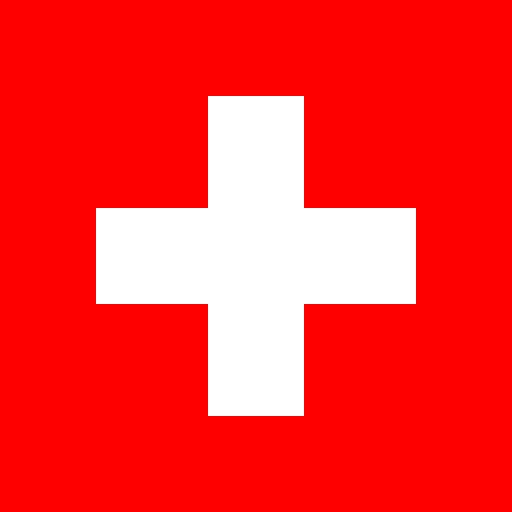
| 4 | Switzerland | 203 | 460 | 470 | 17 | 78.09 |
| = 5 | Sweden | 94 | 410 | 390 | 736 | 76.31 |
| = 5 | Greece | 386 | 370 | 440 | 25 | 76.31 |
| 7 | Norway | 475 | 340 | 490 | 14 | 75.51 |
| 8 | France | 50 | 610 | 850 | 31 | 74.92 |
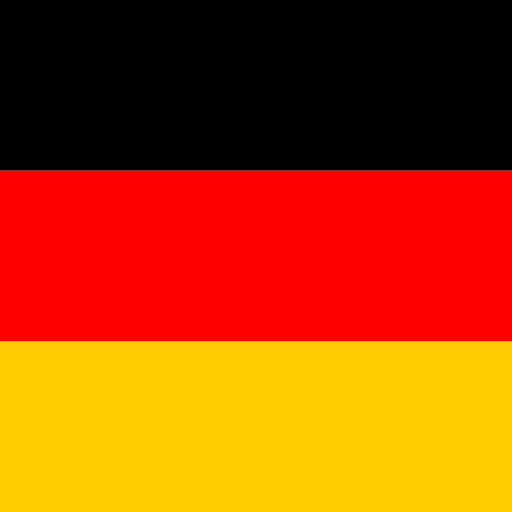
| = 9 | Germany | 177 | 480 | 570 | 75 | 73.89 |
| = 9 | Estonia | 698 | 540 | 440 | 14 | 73.89 |
* Total DDOS Attacks were counted between 2015 to 2021.
**Compromised computers = have been infected with the Gamarue botnetPlease see full methodology below
Indusface found out that Finland and Belgium share the title of the most secure European countries for businesses to allow employees to remotely work from, each with a cyber security score of 82.45 out of 100.
Finland has received the second lowest number of DDOS attacks (79) during 2015 to 2021, only 29 attacks higher than France who has the lowest among the top 10 European countries. This is an important factor for businesses to consider as successful DDOS attacks could block your business sites and bring down all servers and connections you depend on.
Contributing to Belgium’s top ranking is that it has the lowest number of compromised computers per 100,000 internet users (11) in the country. Computers that have been infected with the Gamarue botnet open doors to hackers and make it easier for them to take control of your business data and devices. Belgium also has the joint second lowest malware hosting sites among all top 10 European countries, with an average of 390 sites per 100,000 urls.
Ranking third as the most cyber-secure European country is Austria with an overall cyber security index score of 80.59/100. Boasting the lowest number of both malware hosting sites (34) and phishing sites (260) per 100,000 urls, the country owns less sites that could trick you or contain malware, making businesses less worried about sensitive information being stolen.
In fourth place is Switzerland with a cyber secure index score of 78.09/100. Sweden and Greece rank joint fifth place with a score of 76.31/100.

All Inclusive
Luksusowy kwartalnik turystyczno-podróżniczy. Od 2004 roku opisujemy miejsca, do których warto lecieć dłużej niż na weekend, i ludzi, którzy je prowadzą.