



























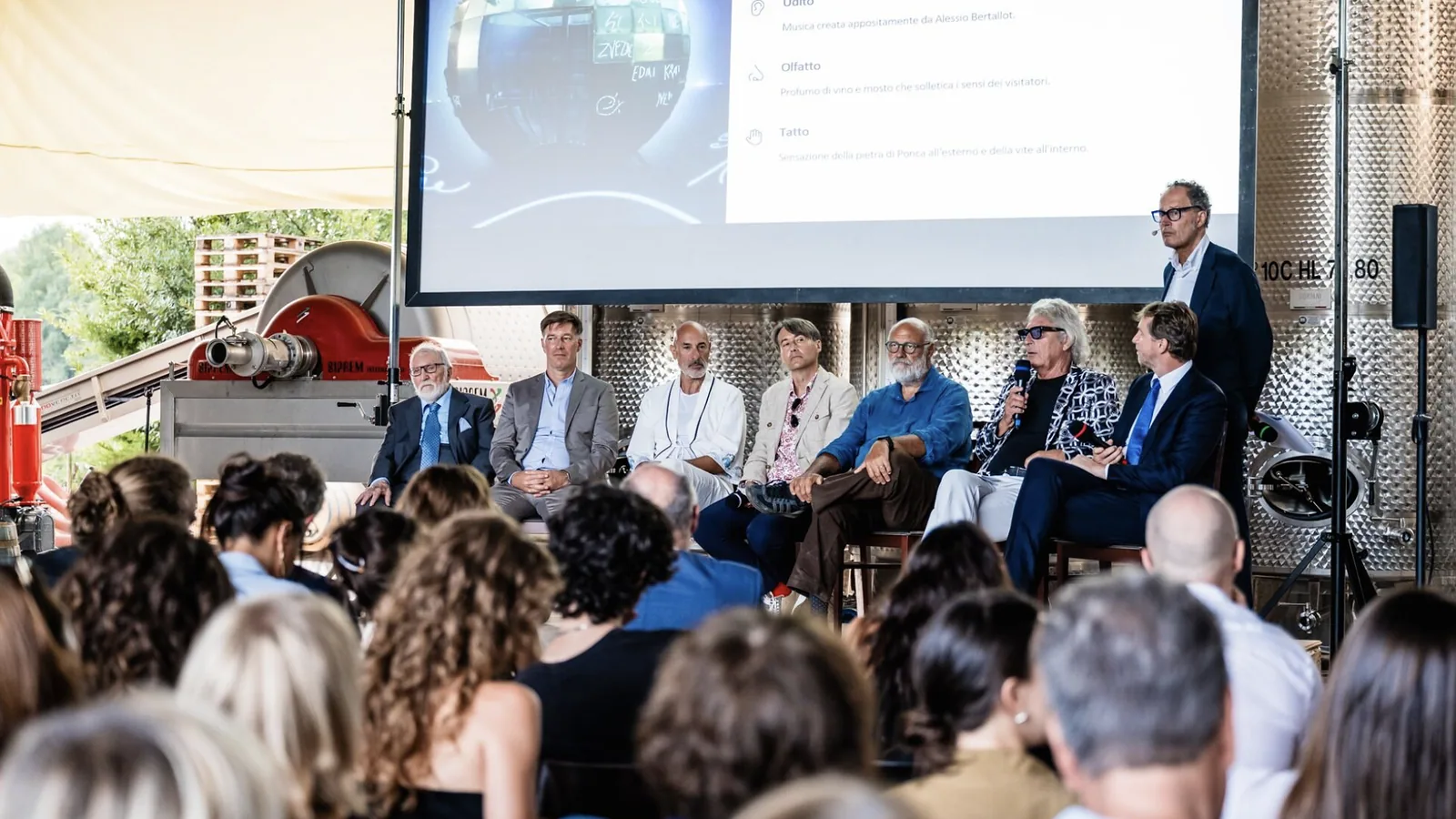

The award ceremony for the first edition of Ars Sine Finibus, the cross-border project promoted by Sinefinis, founded by Robert Princic of the Italian winery Gradis’ciutta and Matjaž Četrtič of the Slovenian winery Ferdinand, took place in the beautiful setting of the Gradis’ciutta winery. The initiative aims at turning the vineyards on the border between Italy and Slovenia into a permanent art park, where site-specific installations created by young artists become a link between art and nature, community and territory. A path that looks to a sustainable future by using natural materials and innovative languages, in harmony with the programme of Gorizia and Nova Gorica as the 2025 European Capitals of Culture.
The project is carried out with the support of the GO!2025 Small Projects Fund of the Interreg VI-A Italy-Slovenia Programme.
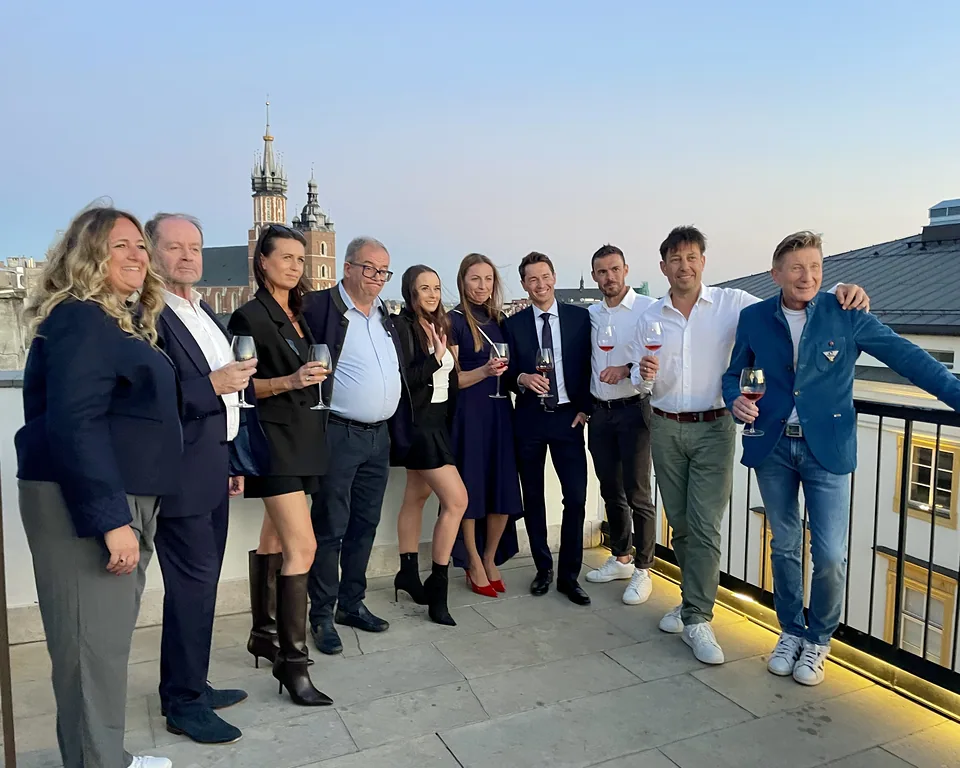
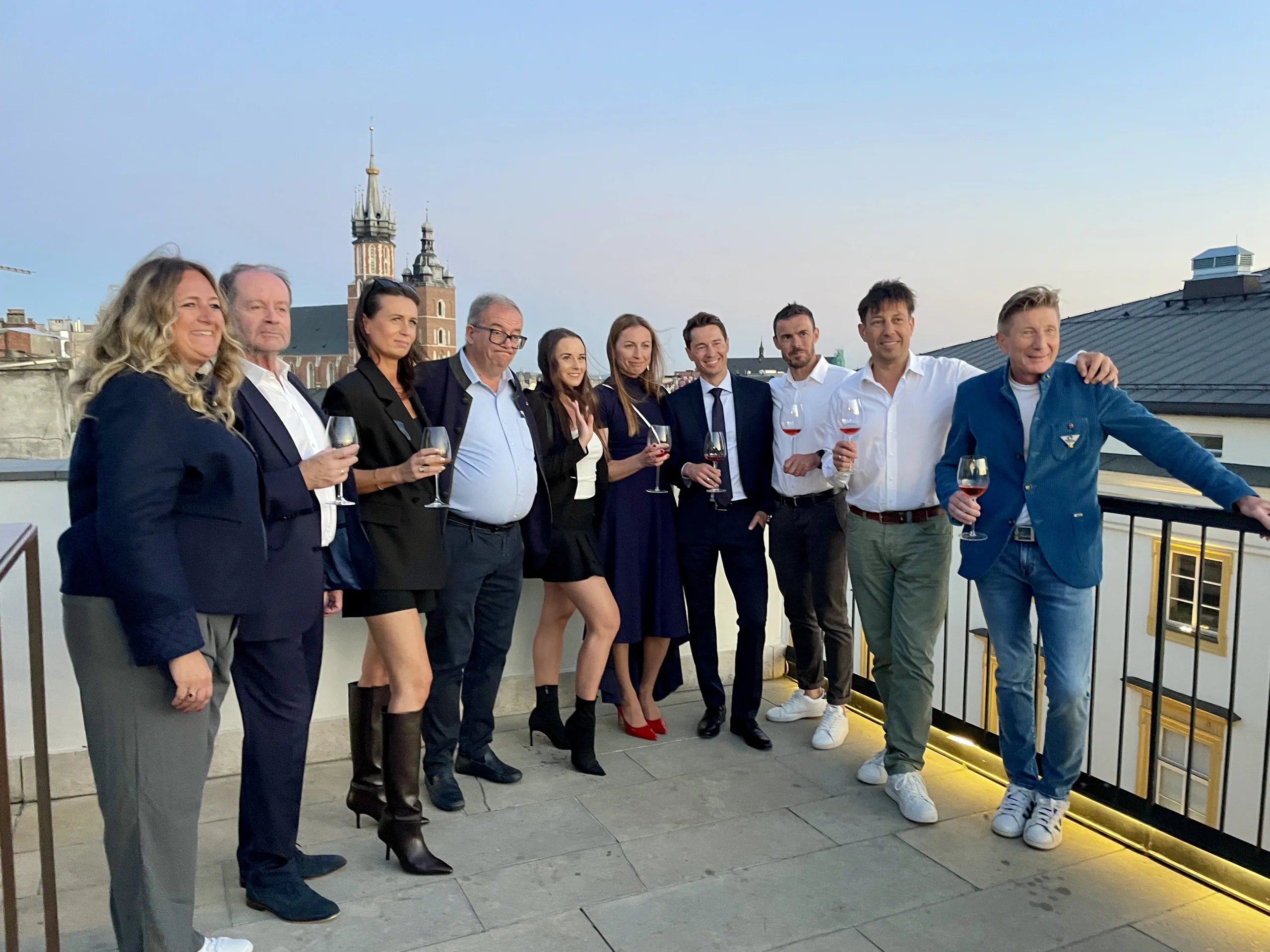
The ceremony was attended by a great number of institutional figures from both countries, including the mayors of San Floriano del Collio and Gorizia, Marjan Drufovka and Rodolfo Ziberna, and the Slovenian ambassador to Italy, Matjaž Longar, as well as the Italian ambassador to Slovenia, Giuseppe Cavagna, a vivid sign of cultural collaboration that goes beyond borders.
The works displayed by the young artists were:
- Sconfinare (Crossing Over) by Sofia Aloni and Lorenzo Lavezzo: it portrays the fracture of 1947 when a political boundary divided cities, families and communities, transforming the staves of barrels into pillars that become a demographic graph and, at the same time, a symbolic gate capable of uniting what history has separated. Materials: used wine barrels.
- Spazio di vite (Space of Vines) by Chiara Andolina, Tommaso Marchesi and Simona Tessaro: a monumental wire cage, interwoven with iron and vine shoots, which becomes habitable architecture and a symbol of conviviality and togetherness. Materials: rods and wire, vine shoots.
- Fortino e Santuario (Fort and Sanctuary) by Pietro Chiarello and Jasmin Sara Prezioso: Fortino, an open structure, interacting with the sky and nature, evoking military palisades but transforming them into a place for recreation and socialising. Materials: wooden stakes for viticulture, blue enamel, wire. Santuario, on the other hand, is a huge blue barrel transformed into habitable architecture that shelters agricultural tools as religious icons, where recreation and spirituality coexist. Materials: barrel, wood, gravel, blue enamel, antique agricultural tools.

All Inclusive
Luksusowy kwartalnik turystyczno-podróżniczy. Od 2004 roku opisujemy miejsca, do których warto lecieć dłużej niż na weekend, i ludzi, którzy je prowadzą.