















































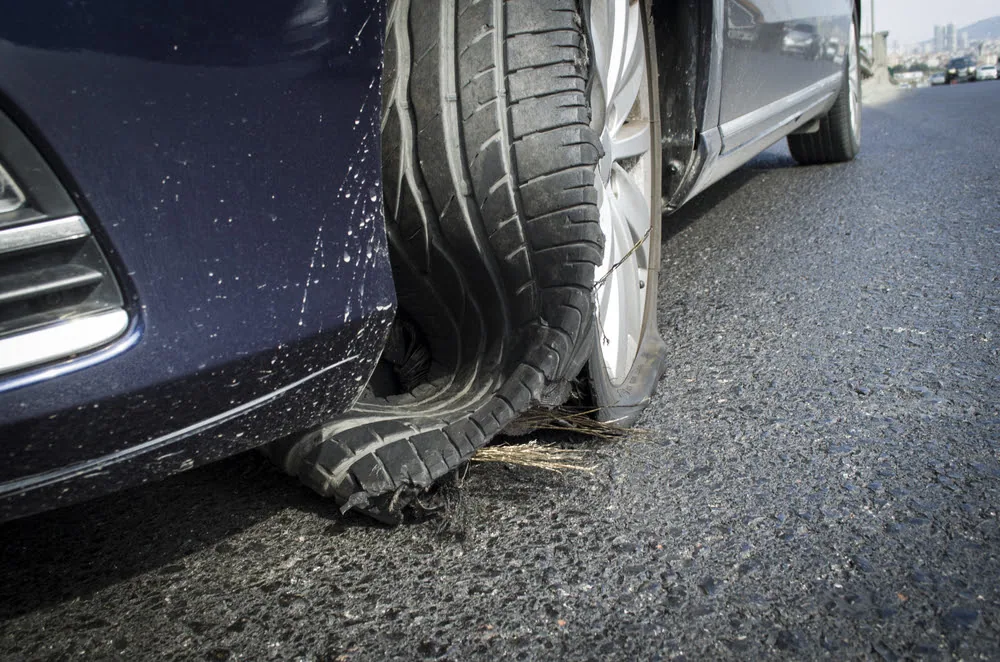

Motoring experts at StressFreeCarRental.com are urging people to check the conditions of their vehicles to prevent serious road incidents leading to casualties.
The most common tire blowout causes are driving with too low pressure or going over a hard, sharp object.
Overloading a vehicle can cause the temperature in a tire to rise which can lead to an overheated tire blowing out even in colder conditions.
Heated air expanding inside tires can ultimately lead to increased pressure inside potentially leading to tire failure.
There are simple ways to prevent a blowout, from regularly checking the tire tread, to packing less into the vehicle whether heading out on holiday or loading the van for the day.
A spokesperson from StressFreeCarRental.com said: “With thousands of car journeys happening every day a common mistake is for drivers to forget to monitor their tire conditions.
“It’s vital for road users to regularly check their tire pressure and look out for punctures before embarking on a journey.
“The weather only worsens tire conditions, so it’s important to use these helpful tips to prevent the repercussions of a dreaded tire blowout.”
Here are five useful tips from StressFreeCarRental.com to avoid a tire blowout:
1. Check the tire tread
Any heat, even during autumn and winter, can result in the rubber on tires becoming softer than usual. This creates more friction on the roads, which can result in over-inflation and eventually tire blowouts.
2. Regularly look for punctures
Punctures are a common issue for road users – from nails on the road to the problems caused by potholes. Before setting off on a long car ride, always check for any type of puncture and listen to the sound from the tires when they get moving.
3. Steer from potholes
Keep an eye on the road as potholes can create issues such as tread separation and punctures which can lead to a blowout. Be mindful of other drivers and stay sensible when avoiding them.
4. Monitor your tire pressure
With the changing temperatures throughout autumn, these conditions can make pressure in tires increase by 1 to 2 psi for every change of 10°C. Keep on top of checking the pressure, as the large increase in tire air pressure can cause them to explore.
5. Don’t overload your vehicle
Checking the recommended maximum weight for your vehicle will help avoid potentially catastrophic blowouts as the weight puts more pressure on the tires and the chassis than they were designed to withstand. If a tire is underinflated and the vehicle is overloaded then you have a potential double whammy with the risk of a blowout increasing significantly.

All Inclusive
Luksusowy kwartalnik turystyczno-podróżniczy. Od 2004 roku opisujemy miejsca, do których warto lecieć dłużej niż na weekend, i ludzi, którzy je prowadzą.